How to Build a Social Listening Dashboard That Drives Real-Time Brand Decisions in 2025
TL;DR
A social listening dashboard transforms scattered social conversations into actionable business intelligence by aggregating real-time brand mentions, sentiment analysis, and competitor monitoring across all major platforms. With 40% of consumers expecting brands to respond within the first hour and the social listening market reaching $3.8 billion in 2025, building a comprehensive dashboard with AI-powered insights, crisis detection, and lead generation capabilities is essential for competitive advantage and faster decision-making.
🔑 Key Takeaways
40% of consumers expect brands to respond within the first hour of reaching out on social media, making real-time monitoring essential for customer satisfaction
89% of marketers track brand mentions as a key performance indicator using social listening tools, putting brands without sophisticated systems at a significant disadvantage
The global social listening platform market is projected to reach $3.8 billion in 2025, highlighting the critical importance of sophisticated monitoring systems
A complete social listening dashboard must include real-time mention tracking, sentiment analysis, competitor monitoring, lead generation feeds, and crisis detection systems
AI-powered conversation analysis enables contextual understanding including sarcasm detection, cultural context interpretation, and predictive analytics for trend forecasting
Successful dashboard implementation requires sophisticated filtering systems to reduce data noise and intelligent prioritization to prevent alert fatigue
ROI from social listening dashboards includes measurable improvements like 20% increases in social media engagement and 15% reductions in customer service response time
How to Build a Social Listening Dashboard That Drives Real-Time Brand Decisions in 2025
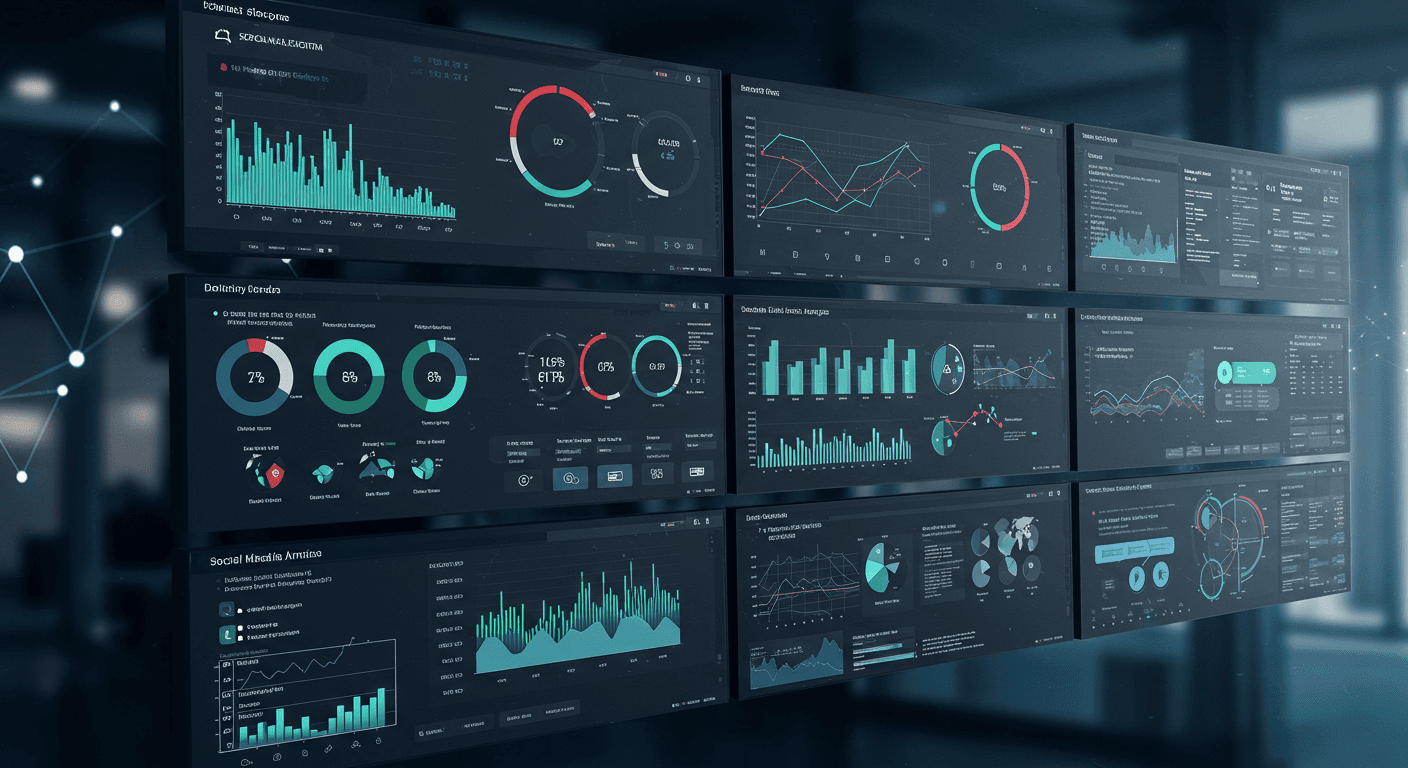
A well-designed social listening dashboard transforms scattered social conversations into actionable business intelligence that drives immediate brand decisions. In 2025, successful consumer brands use centralized dashboards to monitor brand sentiment, track competitor movements, and identify customer needs in real-time, enabling them to respond faster than ever before to market opportunities and threats.
According to Grand View Research (2024), the global social listening platform market is projected to reach $3.8 billion in 2025, highlighting the critical importance of sophisticated monitoring systems for modern brands. This growth reflects how essential real-time social intelligence has become for competitive advantage.
Quick Answer: Essential Components of an Effective Social Listening Dashboard
Definition: A social listening dashboard is a centralized interface that aggregates, analyzes, and visualizes social media conversations, brand mentions, and customer sentiment across multiple platforms to enable data-driven business decisions.
Your social listening dashboard should include:
Real-time brand mention tracking across all major platforms
Sentiment analysis with trend visualization
Competitor monitoring and comparison metrics
Customer conversation identification and lead generation feeds
Crisis detection and alert systems
Performance metrics tied to business outcomes
Why Real-Time Social Listening Dashboards Are Critical in 2025
The Speed of Modern Consumer Expectations
According to Sprout Social Index (2023), 40% of consumers expect brands to respond within the first hour of reaching out on social media. This expectation makes real-time monitoring not just beneficial—it's essential for maintaining customer satisfaction and competitive positioning.
Modern consumers move quickly between platforms, discuss brands across multiple channels simultaneously, and expect immediate responses. A centralized dashboard ensures no conversation goes unnoticed and every opportunity for engagement is captured.
The Scale of Social Conversation Monitoring
According to Mentionlytics (2023), 89% of marketers track brand mentions as a key performance indicator (KPI) using social listening tools. This widespread adoption means brands without sophisticated monitoring systems are operating at a significant disadvantage.
The volume of social conversations requiring monitoring has exploded across platforms like Reddit, Twitter, YouTube, TikTok, and emerging social networks. Manual monitoring is no longer feasible—automated dashboard systems are essential for comprehensive coverage.
Core Components of a High-Performance Social Listening Dashboard
1. Real-Time Brand Mention Monitoring
Your dashboard's foundation should be comprehensive mention tracking that captures:
Platform Coverage:
Reddit discussions and community conversations
Twitter mentions, replies, and hashtag usage
YouTube comments and video descriptions
LinkedIn professional discussions
TikTok and Instagram social content
News articles and blog mentions
Smart Filtering Systems:
Keyword variations and misspellings
Context-aware mention detection
Spam and irrelevant content filtering
Geographic and demographic segmentation
2. Sentiment Analysis and Trend Visualization
Transform raw mentions into actionable insights through:
Visual Sentiment Tracking:
Real-time sentiment scores with historical trends
Platform-specific sentiment breakdowns
Topic-based sentiment analysis
Competitor sentiment comparisons
Trend Identification:
Emerging conversation themes
Viral content detection
Seasonal pattern recognition
Crisis early warning indicators
3. Competitor Intelligence Integration
Monitor competitive landscape through:
Competitive Mention Tracking:
Direct competitor brand mentions
Share of voice comparisons
Competitive campaign performance
Market positioning analysis
Opportunity Identification:
Competitor weakness detection
Market gap identification
Customer switching indicators
Competitive response timing
4. Customer Conversation and Lead Generation
Convert social listening into business growth:
Lead Identification Systems:
Purchase intent signal detection
Problem-solution conversation mapping
High-value customer identification
Engagement opportunity prioritization
Community Discovery:
Niche community identification
High-engagement audience mapping
Influencer and advocate detection
Partnership opportunity recognition
Step-by-Step Guide to Building Your Social Listening Dashboard
Step 1: Define Your Monitoring Objectives
Before building your dashboard, establish clear goals:
Brand Protection Objectives:
Crisis detection and response time targets
Reputation management KPIs
Customer service response benchmarks
Competitive threat monitoring
Growth-Focused Objectives:
Lead generation targets from social conversations
Community engagement metrics
Content performance indicators
Market opportunity identification
Step 2: Select Your Data Sources and Integration Points
Primary Platform Integration:
Reddit monitoring for community discussions
Twitter monitoring for real-time conversations
YouTube for video content and comment analysis
LinkedIn for B2B and professional discussions
Advanced Integration Capabilities:
API connections for real-time data feeds
Webhook systems for instant notifications
Cross-platform conversation threading
Historical data import and analysis
Step 3: Design Your Dashboard Layout for Quick Decision-Making
Executive Summary Section:
Key metrics at-a-glance
Trend indicators and alerts
Performance against targets
Priority action items
Detailed Analysis Panels:
Platform-specific breakdowns
Sentiment analysis deep-dives
Competitor comparison views
Customer conversation feeds
Step 4: Implement Alert and Notification Systems
Crisis Detection Alerts:
Negative sentiment spikes
Viral negative content detection
Competitor crisis opportunities
Customer service escalation triggers
Opportunity Notifications:
High-intent purchase conversations
Positive brand advocacy moments
Viral content participation opportunities
Influencer engagement possibilities
Step 5: Create Actionable Workflow Integration
Response Workflow Automation:
Automatic ticket creation for customer service
Sales team notifications for qualified leads
Marketing team alerts for content opportunities
Executive notifications for crisis situations
Performance Tracking Integration:
Response time measurement
Conversion tracking from social leads
Engagement rate optimization
ROI calculation from social listening activities
Advanced Dashboard Features for 2025
AI-Powered Conversation Analysis
Modern social listening dashboards leverage artificial intelligence for:
Contextual Understanding:
Sarcasm and irony detection
Cultural context interpretation
Multi-language conversation analysis
Visual content analysis integration
Predictive Analytics:
Trend forecasting based on conversation patterns
Crisis probability scoring
Customer lifetime value prediction from social behavior
Market opportunity timing optimization
Smart Community Discovery Integration
Advanced dashboards include community discovery capabilities that:
Identify High-Value Communities:
Niche audience segment mapping
Engagement quality assessment
Community influence scoring
Growth potential evaluation
Enable Strategic Community Engagement:
Optimal posting time identification
Content format preference analysis
Community-specific messaging optimization
Relationship building opportunity mapping
Measuring Dashboard Effectiveness and ROI
Key Performance Indicators for Dashboard Success
Response Time Metrics:
Average time from mention to response
Crisis detection and response speed
Customer service resolution time
Competitive response timing
Business Impact Measurements:
Leads generated from social conversations
Customer acquisition cost reduction
Brand sentiment improvement rates
Market share changes attributed to social intelligence
ROI Calculation Framework
While specific ROI percentages vary by implementation, Sprout Social case studies demonstrate measurable improvements such as 20% increases in social media engagement and 15% reductions in customer service response time after implementing comprehensive social listening platforms.
Calculate your dashboard ROI through:
Direct Revenue Attribution:
Sales generated from social listening leads
Customer retention improvements from proactive engagement
Crisis prevention cost savings
Competitive advantage revenue gains
Operational Efficiency Gains:
Reduced manual monitoring time
Faster decision-making processes
Improved resource allocation
Enhanced team productivity
Integration with Modern Marketing Technology Stack
CRM and Sales Platform Integration
Connect your social listening dashboard with:
Customer Relationship Management:
Automatic lead creation from high-intent conversations
Customer profile enrichment with social data
Sales pipeline integration for social-sourced leads
Customer service ticket creation from social mentions
Marketing Automation Platforms:
Trigger-based campaign activation from social signals
Audience segmentation based on social behavior
Content personalization using social insights
Campaign performance optimization through social feedback
Analytics and Reporting Integration
Business Intelligence Platforms:
Social listening data integration with overall business metrics
Cross-channel attribution analysis
Executive dashboard creation with social KPIs
Predictive modeling using social conversation data
Common Dashboard Implementation Challenges and Solutions
Data Quality and Noise Reduction
Challenge: Social platforms generate massive amounts of irrelevant data that can overwhelm decision-makers.
Solution: Implement sophisticated filtering systems that:
Use AI-powered relevance scoring
Apply contextual filters based on business objectives
Create custom keyword libraries with negative keywords
Establish quality thresholds for conversation inclusion
Cross-Platform Conversation Threading
Challenge: Customers often discuss brands across multiple platforms, making it difficult to track complete conversation contexts.
Solution: Develop conversation threading capabilities that:
Link related discussions across platforms
Track customer journeys through social touchpoints
Maintain conversation history for context
Enable comprehensive response strategies
Alert Fatigue and Prioritization
Challenge: Too many alerts can overwhelm teams and reduce response effectiveness.
Solution: Create intelligent prioritization systems that:
Score alerts based on business impact potential
Customize alert thresholds by team and role
Implement escalation procedures for high-priority situations
Provide clear action recommendations with each alert
Future-Proofing Your Social Listening Dashboard
Emerging Platform Integration
As new social platforms gain popularity, ensure your dashboard can:
Adapt to New Channels:
Integrate emerging social platforms quickly
Monitor new content formats (audio, AR/VR, live streaming)
Track cross-platform conversation migration
Maintain historical data consistency across platform changes
Privacy and Compliance Considerations
Build privacy-conscious monitoring systems that:
Respect User Privacy:
Comply with platform terms of service
Implement data retention policies
Ensure GDPR and privacy regulation compliance
Maintain ethical data collection practices
Getting Started: Your Social Listening Dashboard Implementation Plan
Phase 1: Foundation Setup (Weeks 1-2)
Define monitoring objectives and KPIs
Select primary platforms for monitoring
Establish keyword libraries and filtering criteria
Set up basic mention tracking and alerts
Phase 2: Advanced Features Integration (Weeks 3-4)
Implement sentiment analysis and trend tracking
Add competitor monitoring capabilities
Create custom dashboard layouts for different team roles
Establish workflow integration with existing tools
Phase 3: Optimization and Scaling (Weeks 5-8)
Fine-tune alert systems and reduce noise
Implement advanced AI features and predictive analytics
Create comprehensive reporting and ROI measurement
Train teams on dashboard utilization and best practices
Conclusion: Transform Social Conversations into Competitive Advantage
Building an effective social listening dashboard in 2025 requires more than just aggregating mentions—it demands creating a sophisticated intelligence system that transforms social conversations into immediate business value. The most successful consumer brands use their dashboards not just to monitor what's being said, but to identify opportunities, prevent crises, and make faster, more informed decisions than their competitors.
With the social listening platform market reaching $3.8 billion in 2025, the brands that invest in comprehensive dashboard systems today will have significant advantages in customer engagement, market responsiveness, and competitive intelligence.
Ready to build a social listening dashboard that drives real business results? Explore Pluggo's comprehensive social intelligence platform to see how advanced monitoring, AI-powered insights, and community discovery can transform your brand's social listening capabilities into a competitive advantage that drives measurable growth.
Start with Pluggo's trending conversations feature to see real-time social intelligence in action, then scale to a full dashboard solution that puts your brand ahead of every conversation that matters.
Frequently Asked Questions
What's the minimum budget needed to build an effective social listening dashboard?
Budget requirements vary significantly based on your monitoring scope and platform integrations. You can start with basic mention tracking for a few hundred dollars monthly, but comprehensive dashboards with AI-powered analytics, multi-platform integration, and advanced filtering typically require $1,000-$5,000 monthly for mid-sized brands. Enterprise solutions with custom integrations and dedicated support can range from $10,000-$50,000+ monthly depending on data volume and feature requirements.
How long does it typically take to see measurable ROI from a social listening dashboard?
Most brands see initial benefits within 2-4 weeks of implementation, particularly in response time improvements and crisis prevention. Measurable ROI from lead generation and customer acquisition typically becomes apparent within 3-6 months as your team optimizes workflows and fine-tunes targeting. The key is starting with clear KPIs and tracking metrics like response time reduction, leads generated, and customer service efficiency gains from day one.
Which social platforms should I prioritize if I can't monitor everything at once?
Start with the platforms where your target audience is most active and vocal about your industry. Reddit and Twitter typically provide the highest volume of actionable conversations for most B2C brands, while LinkedIn is essential for B2B companies. YouTube comments offer valuable product feedback, and TikTok/Instagram are crucial for brands targeting younger demographics. Begin with 2-3 core platforms and expand as your monitoring capabilities mature.
How do I prevent my team from getting overwhelmed by social listening alerts?
Implement intelligent alert prioritization by scoring notifications based on business impact potential, audience size, and sentiment severity. Set different alert thresholds for various team roles - executives should only receive crisis-level alerts, while community managers can handle routine mentions. Use AI-powered filtering to eliminate spam and irrelevant content, and establish clear escalation procedures so team members know exactly when and how to respond to different alert types.
Can I integrate social listening data with my existing CRM and marketing automation tools?
Yes, modern social listening platforms offer robust API integrations with most major CRM systems like Salesforce, HubSpot, and Pipedrive. You can automatically create leads from high-intent social conversations, enrich customer profiles with social data, and trigger marketing campaigns based on social signals. The key is choosing a dashboard solution that offers pre-built integrations with your existing tech stack or provides flexible APIs for custom connections.